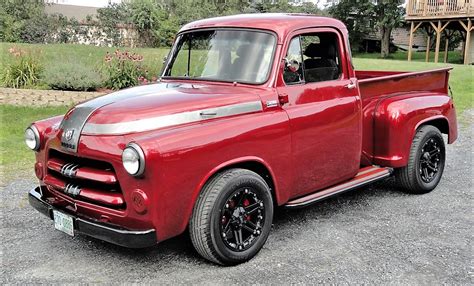
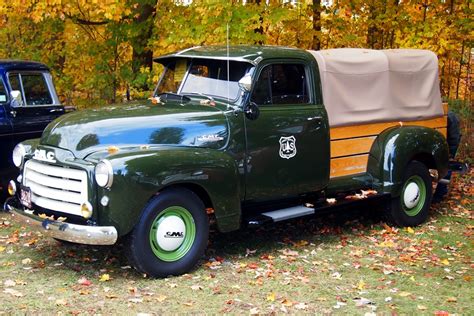
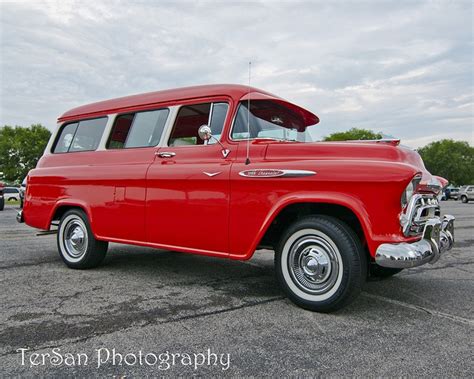
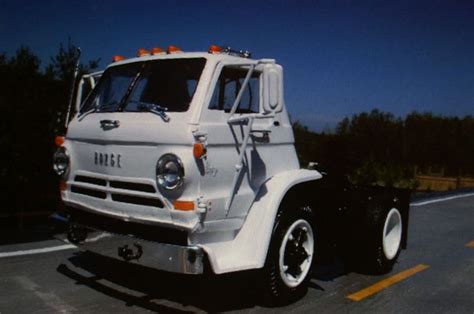
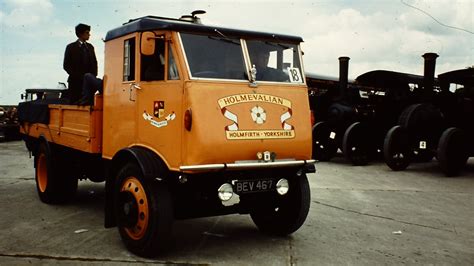
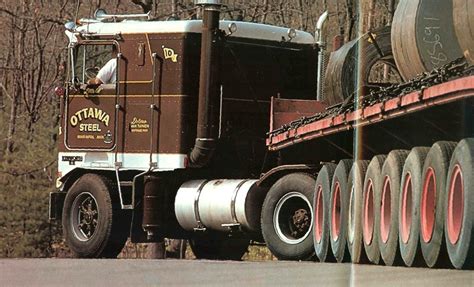
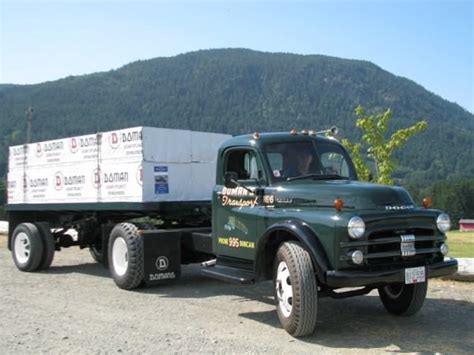
Works double for old trucks…

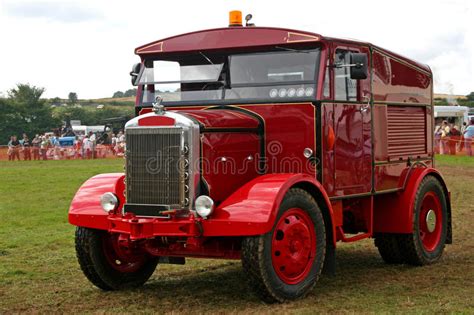
I have been waiting to post this Phil, on successful completion of the repairs of your truck. I am proud to post it now. If you don’t look back at your truck when you walk away, you are not a truck owner… I still do after 23 years of owning my old beast. Here is to you owning the Red Dragon for 23 years and at that time still able to look back at her and smile.

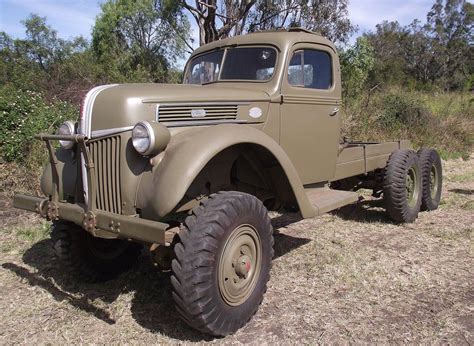
A Conundrum of a Ford F-135?

A friend,, BW Bandy over at his blog “The View From Here”  http://everybodyhastobesomewhere.blogspot.com/ Posted a picture of a Canadian Ford medium duty truck that looks like a late 1940s F-5 or F-6 but has a small plate that says F-135. I reached out to Leigh and Phil, Leigh found some fleeting mention of outside the US market and found references in Canada and New Zealand.

I and BW Bandy would be appreciative if you have any idea or information. I have already did a rabbit hole search as well as Leigh and Phil and we haven’t found any info.

Update already from Leigh…

It is a Mercury Truck after all.

Nomenclature[edit]

In 1948, following the introduction of the Ford F-Series, Mercury adopted the use of the “M” prefix, for Mercury. From 1948 to 1950, nominal tonnage ratings were replaced by a series designation in which the numbers indicate the GVWR when equipped with tires of appropriate capacity. Each code number is arrived at by dividing the GVWR of the series by 100. Thus an F-47 (M-47) indicates a GVWR of 4700 lbs., F-135 (M-135) indicates 13500 lbs., etc.

In 1951–52, Ford of Canada got back in step with Ford USA with F-1 (M-1), F-2 (M-2) etc.

Found HERE,

https://en.wikipedia.org/wiki/Mercury_M-Series

A white crayon too, white, an absence of all color.

😜

Technically, pure white is the absence of color. In other words, you can’t mix colors to create white. Therefore, white is the absence of color in the strictest sense of the definition.

Are Black & White Colors? – Color Matters

Color Mattershttps://www.colormatters.com › color-and-design 

From Adobe.

What colors make black? What colors make white?

The way to create black or white depends on whether you’re working with an additive color model (light-based) or a subtractive color model (ink-based).

Additive colors combine to create white.

Light and electromagnetic radiation both create additive color. In this model of color theory, the combination of all colors creates the perception of white. You’ll also hear this model referred to as RGB, because when you work with additive color, you use red, green, and blue as primary colors. 

Digital color is additive.

Additive color is used in digital design, because computer screens show hues with colored light. Each pixel is composed of three tiny specks of phosphor, which emit red, green, or blue light when struck by an electron beam. When working with color digitally, like in Adobe Photoshop or Illustrator, your screen uses different combinations of these lights to create all the colors you see. So what is black on a screen? No lit phosphors.

Subtractive colors combine to create black.

The color of pigments and inks are subtractive. Subtractive colors are made of light that’s already passed through material. Painters can combine several colors to make what looks like black paint. Printing also uses subtractive colors; cyan (C), magenta (M), yellow (Y), and key or black (K) are the primary inks used. This is why printable files are called CMYK .

White reflects (light) of all colors, but white is not a color, hence black is also not a color but an amalgam of all the colors that are absorbed and are not reflected back.